Make leg shaving a low-friction task rather than a speed challenge
Shaving is optional, and a close result is not worth repeated passes over irritated skin. A useful routine gives preparation, blade handling and cleanup their own place. The aim is a comfortable cosmetic task with realistic expectations, without treating shaving as a solution for an unexplained rash or ingrown-hair problem.
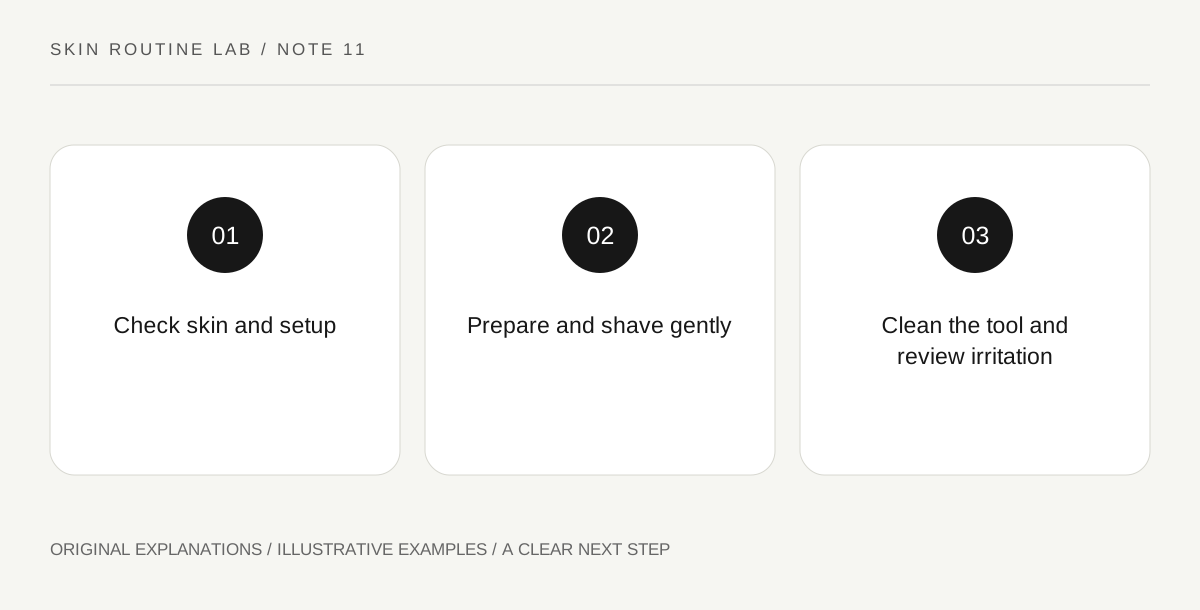
Original explanatory diagram. Read the full method and limitations below.
Choose the task and inspect the area
Decide which area you want to shave and whether the skin is currently comfortable enough for the task. Do not shave over a new rash, broken skin or an area that needs assessment merely to finish a planned look. If recurrent bumps, pain or other symptoms occur, ask a qualified professional about the cause and suitable approach. AAD's shaving guidance emphasizes preparation and technique, but individual conditions can change what is appropriate. Keep hair removal a choice rather than an obligation. Skipping a session or leaving an irritated patch alone is a practical decision, not a failure to complete personal care.
Prepare hair and skin gently
AAD recommends wetting the skin and hair before shaving and using an appropriate shaving product. Follow the actual product directions, particularly with sensitive skin. Avoid beginning on dry skin simply because only a small patch remains. Arrange the razor and other supplies where you can reach them without balancing awkwardly in a slippery shower. Choose a stable, well-lit setting and do not rush while moving or distracted. If a product stings, stop and seek appropriate advice rather than treating the sensation as a necessary part of a close shave. Preparation should reduce friction, not add an aggressive scrub.
Use the razor as directed
Shave in the direction of hair growth with appropriate light handling and rinse the blade during use, following AAD and manufacturer guidance. Avoid repeated hard passes over one area to chase absolute smoothness. Replace blades according to directions and condition, and keep the razor personal rather than sharing. A dull or damaged tool is not something to compensate for with more pressure. If seeing or reaching an area is difficult, choose a safer arrangement or an alternative method with appropriate advice. Do not contort or use an unsuitable mirror setup that makes a cosmetic task an avoidable fall risk.
Clean up and review recurring problems
Rinse and care for the razor according to its instructions, and store it so it can dry appropriately rather than sitting in pooled water. Follow suitable aftercare without immediately layering unfamiliar strong exfoliants over freshly shaved skin. If irritation recurs, record the method, products and affected area for a professional conversation. Do not dig out hairs with a needle or apply a treatment borrowed from another person's routine. The useful review asks whether the method is comfortable, manageable and appropriate for you. A razor advertised for a particular gender does not by itself answer those questions or guarantee a closer or safer result.
An area that is hard to reach does not need to be finished in the same session. Keep supplies within reach so the task does not require an awkward movement to retrieve them.
An illustrative rushed morning
Priya plans to shave before leaving for work but notices that she is rushing and her usual razor is damaged. She skips the task that morning and replaces the tool appropriately. At the next session she uses a stable setting, suitable preparation and fewer passes. Recurrent bumps remain a separate question for her dermatologist.
Practical checks
Optional checkboxes save only in this browser.
Questions that come up
Should I shave against the grain for the closest finish?
AAD advises shaving in the direction of hair growth to help avoid irritation. Follow appropriate technique rather than chasing maximum closeness at any cost.
Can I pick out a painful ingrown hair?
Avoid digging or puncturing the skin. Ask a qualified professional about persistent, painful or inflamed bumps.
References and scope
These sources support the factual background. Examples and exercises are original illustrative teaching material. References do not imply endorsement.
- AAD: Hair Removal: How to Shave — Shaving preparation, direction, blade care and avoiding irritation.