Makeup and tools6 min read
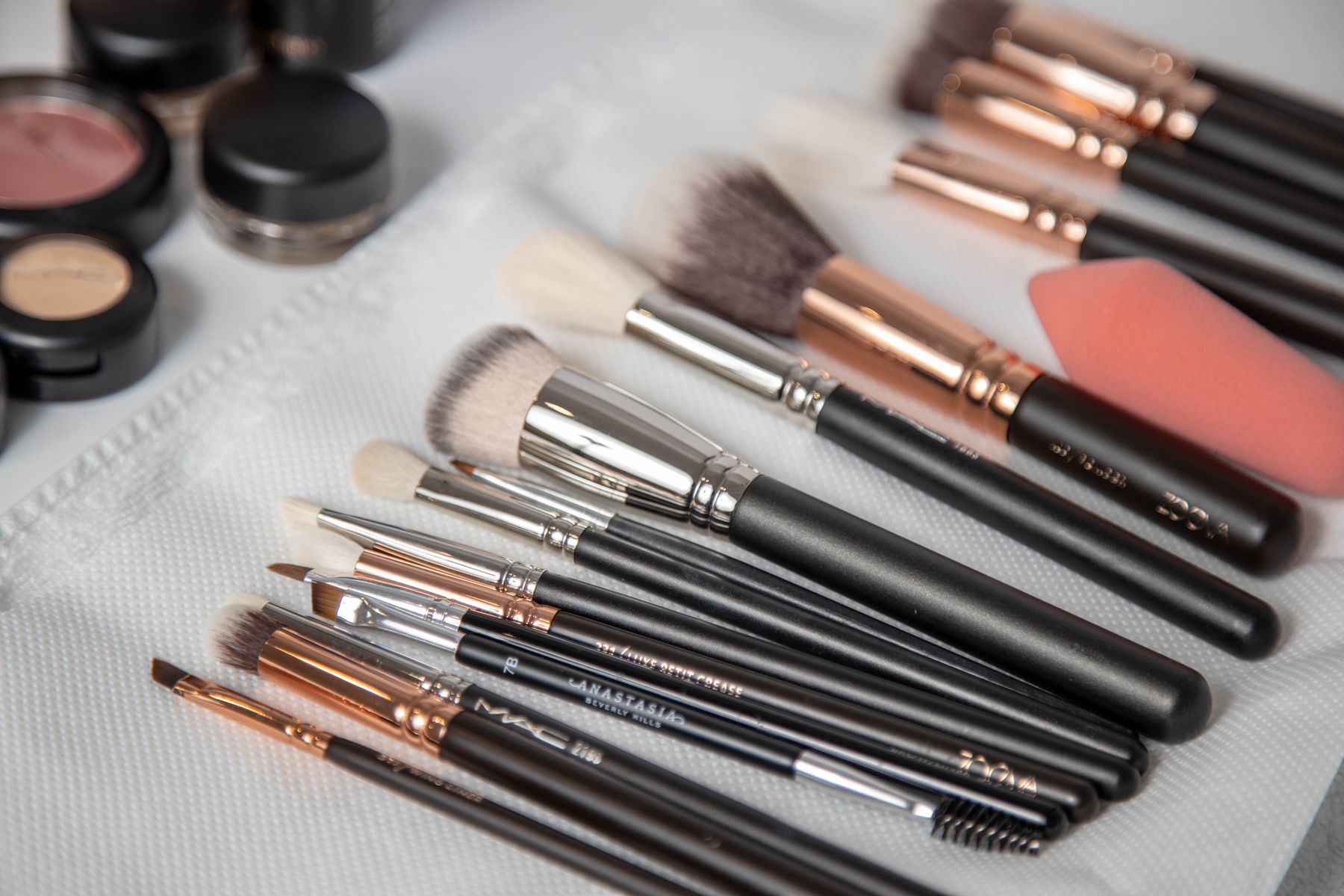
A brush-cleaning session succeeds when the brushes are ready for their next use, not when the last bowl of water is emptied. Plan the clean surface, the drying edge and the time without those tools before you start. This guide connects the American Academy of Dermatology’s washing method with the practical decisions that prevent a washed brush from immediately returning to a damp pouch or a crowded cup.
Read the guide ↗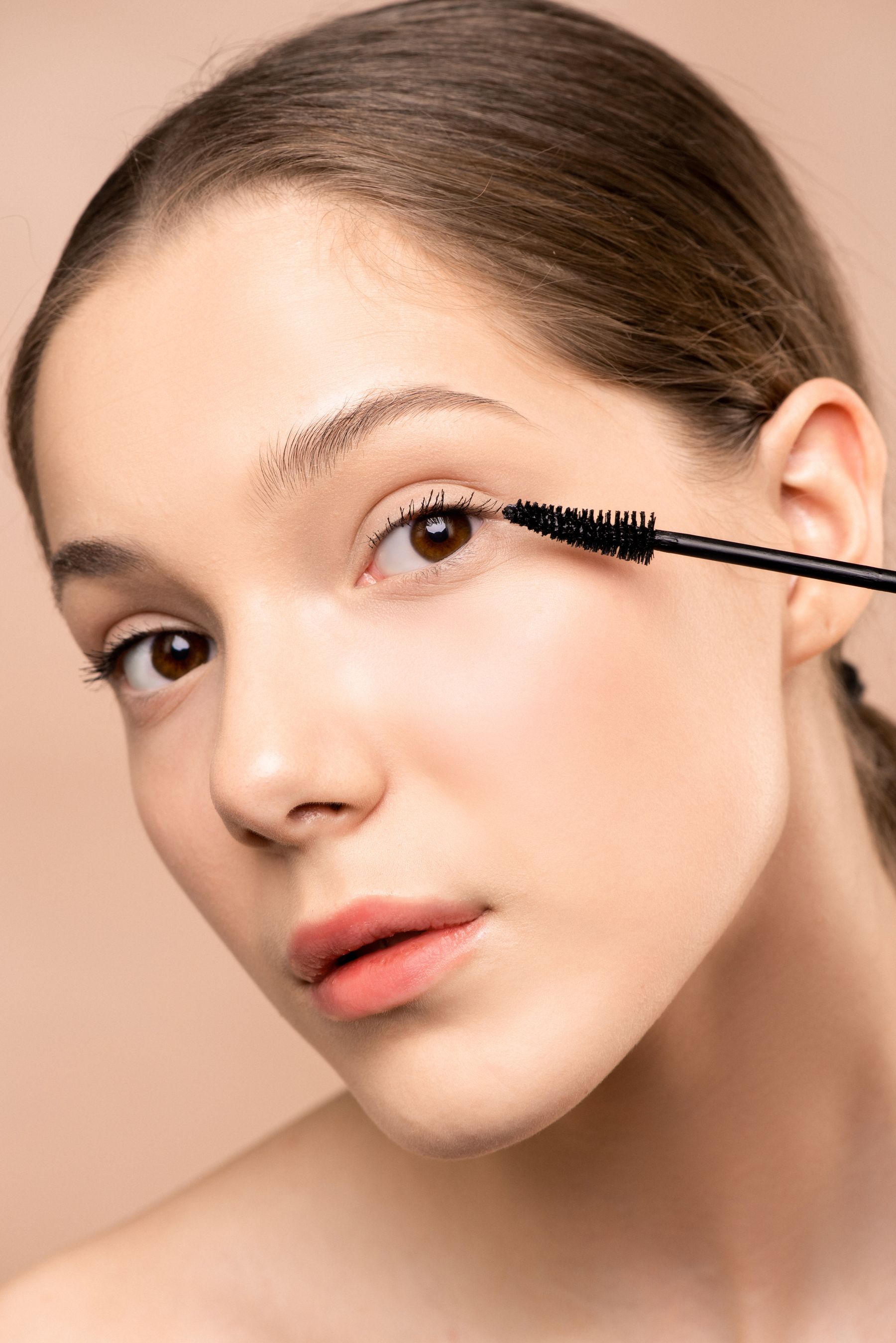
Makeup and tools6 min read
Eye makeup involves a product, an applicator and a small working area close to the eye. Good handling starts before drawing the first line: identify the intended use, settle into a stationary place and keep the formula in the condition supplied. This guide explains how to make those boundaries easy to follow when a makeup collection contains similar pencils, several tubes and products carried between home and a bag.
Read the guide ↗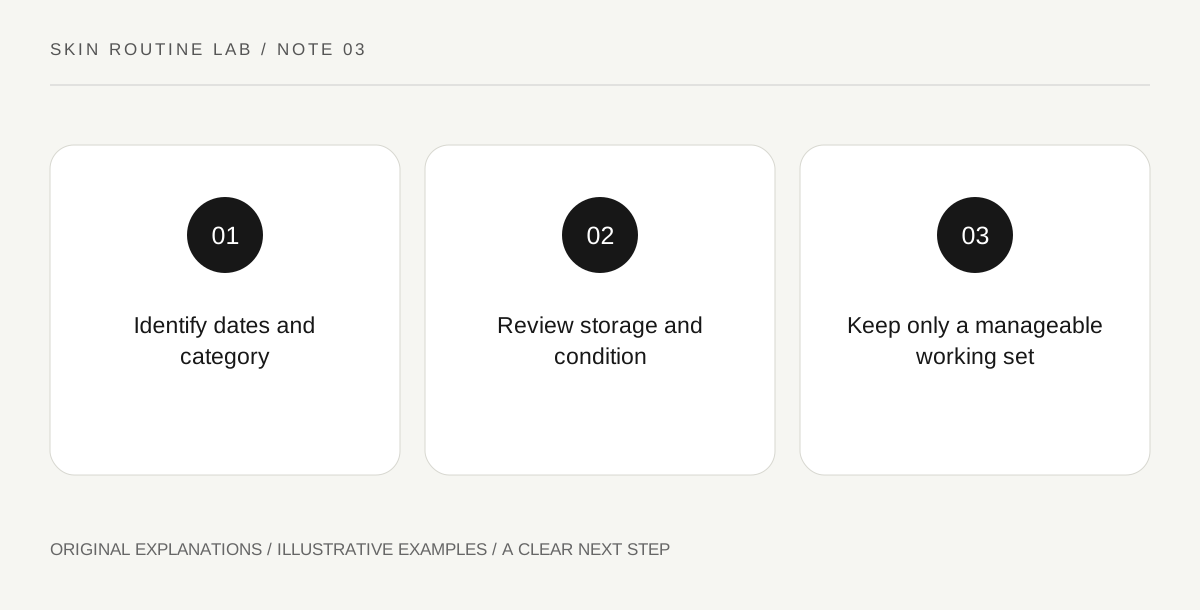
Makeup and tools3 min read
Cosmetics do not all last the same amount of time, and a purchase date is not always an opening date. A useful shelf review combines label directions, storage history and product condition. It avoids a universal calendar rule that ignores the differences between eye makeup, powders, creams and products regulated as medicines.
Read the guide ↗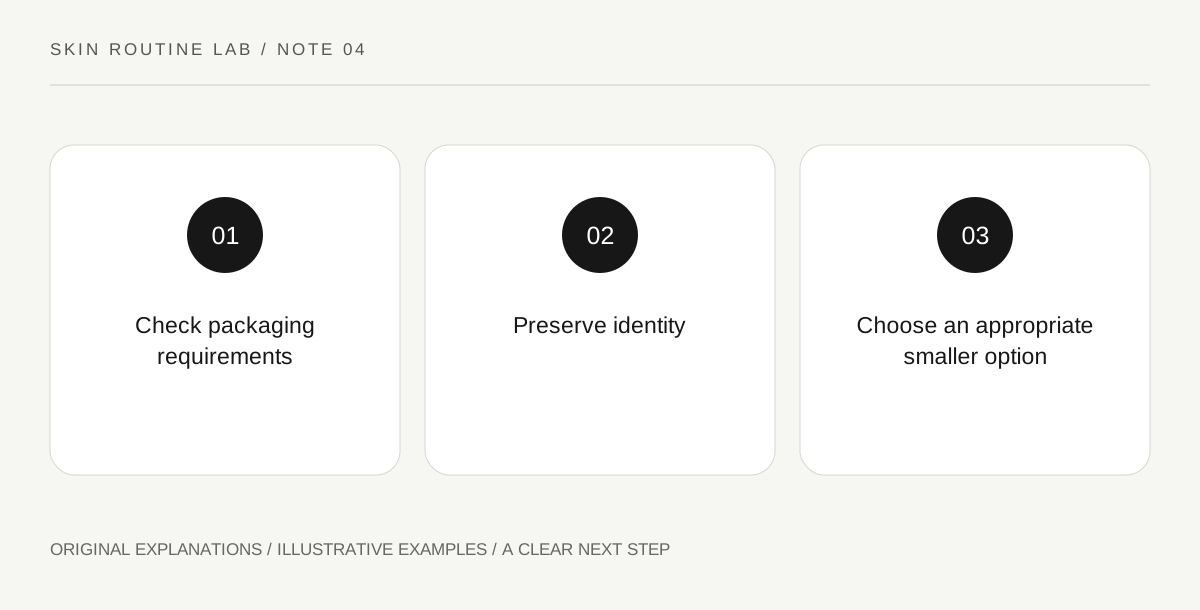
Makeup and tools3 min read
A smaller jar can make a bag lighter while losing a readable label, a clean dispensing system or the product's identity. Decanting is a handling decision, not merely a packing trick. The most useful review asks whether the smaller format preserves appropriate use and whether transferring is necessary at all.
Read the guide ↗
Skin concerns3 min read
Makeup can serve a cosmetic purpose while acne needs its own care plan. The useful questions are whether the product is suitable for acne-prone skin, how it is applied and removed, and whether it seems to worsen the concern. Coverage does not diagnose the bumps beneath it or make an irritated routine acceptable.
Read the guide ↗
Skin concerns3 min read
Hair products can reach more than hair: a fringe rests on the forehead, conditioner runs over the back and styling residue reaches a pillowcase. When bumps cluster near these contact areas, the exposure pattern is worth discussing. It is a clue to investigate, not a diagnosis made from location alone.
Read the guide ↗
Skin concerns3 min read
A mark left after an irritated spot can lead to scrubbing, picking and several brightening products at once. That cycle can create more irritation instead of a useful plan. The first question is what the mark is and what is still triggering inflammation, particularly when the skin readily develops persistent discoloration.
Read the guide ↗
Skin concerns3 min read
Melasma can make a person want coverage today while treatment takes time. Cosmetics and light protection have different roles, and a comfortable plan can account for both. This guide concerns practical questions for someone already discussing melasma with a dermatologist; it does not diagnose facial pigmentation or prescribe a treatment regimen.
Read the guide ↗
Skin concerns3 min read
With diagnosed rosacea, a routine can become uncomfortable because of rubbing, hot water or too many corrective steps as well as the products themselves. A gentler handling review is a useful conversation with your dermatologist. It supports an existing care plan and does not diagnose redness or replace prescribed treatment.
Read the guide ↗
Skin concerns3 min read
Fragrance-free, unscented and natural can sound like versions of the same promise, but they do not answer exactly the same question. A useful label review starts with a known concern and the full product information. Marketing language cannot guarantee that nobody will react or identify the cause of a rash.
Read the guide ↗
Hair removal3 min read
Shaving is optional, and a close result is not worth repeated passes over irritated skin. A useful routine gives preparation, blade handling and cleanup their own place. The aim is a comfortable cosmetic task with realistic expectations, without treating shaving as a solution for an unexplained rash or ingrown-hair problem.
Read the guide ↗
Hair removal3 min read
A waxing appointment involves more than deciding how much hair to remove. Skin condition, products and medicines can affect whether the procedure is appropriate. A useful booking conversation gives the provider accurate information and leaves time for professional advice, without stopping prescribed care on your own to fit an appointment.
Read the guide ↗
Hair removal3 min read
Laser hair removal is a procedure with risks, even when booking it feels as easy as purchasing a beauty service. A consultation should explain suitability, provider expertise and realistic results for your skin and hair. An advertised package cannot determine the right course or promise permanent smoothness for everyone.
Read the guide ↗
Hair removal3 min read
A depilatory cream is not interchangeable with shaving cream or a body lotion. Its intended area, test instructions and maximum contact time matter. The practical aim is following the exact product method with a clear stop point, without assuming that extra time creates a better result or that all body areas are equivalent.
Read the guide ↗
Everyday care3 min read
Self-tanner creates a cosmetic color; it does not make ultraviolet exposure safe. A useful plan also accounts for product directions, dry areas, drying time and clothing contact. Thinking through the whole sequence can reduce rushed application and the urge to fix an uneven area with harsh scrubbing.
Read the guide ↗
Everyday care3 min read
Exfoliation is optional, and a scrub, brush and acid product are not simply different strengths of the same task. The decision should account for your skin, current products and any treatment. A useful review can end with choosing a gentle appropriate method, asking a professional or leaving exfoliation out.
Read the guide ↗
Everyday care3 min read
An alpha hydroxy acid percentage can look like a simple way to rank products, but formula, directions and sun-sensitivity cautions also matter. A higher number is not a personalized recommendation. Reading the complete label helps you decide what remains unclear before adding an optional acid product to an existing routine.
Read the guide ↗
Everyday care3 min read
Dry lips can make flavored, tingling or plumping products feel temporarily interesting while adding irritation. A useful review asks whether the product is comfortable and appropriate, rather than whether you can feel it working. Persistent cracking, pain or a changing spot needs a professional conversation instead of repeated cosmetic experiments.
Read the guide ↗
Everyday care3 min read
A workout changes what touches your skin: sweat, towels, equipment, tight clothing and hands. A useful skin routine addresses those contacts without turning exercise into an acne treatment or a reason to scrub. The goal is a practical transition out of sweaty gear and into comfortable care.
Read the guide ↗
Everyday care3 min read
Swimming can leave skin feeling dry, especially when the trip home begins in a wet swimsuit or a hot shower becomes the main cleanup. A useful plan accounts for rinsing, clothing and familiar care. It does not diagnose every pool-related rash or imply that a cosmetic can prevent all water-related skin problems.
Read the guide ↗