Choose makeup for acne-prone skin without turning coverage into treatment
Makeup can serve a cosmetic purpose while acne needs its own care plan. The useful questions are whether the product is suitable for acne-prone skin, how it is applied and removed, and whether it seems to worsen the concern. Coverage does not diagnose the bumps beneath it or make an irritated routine acceptable.
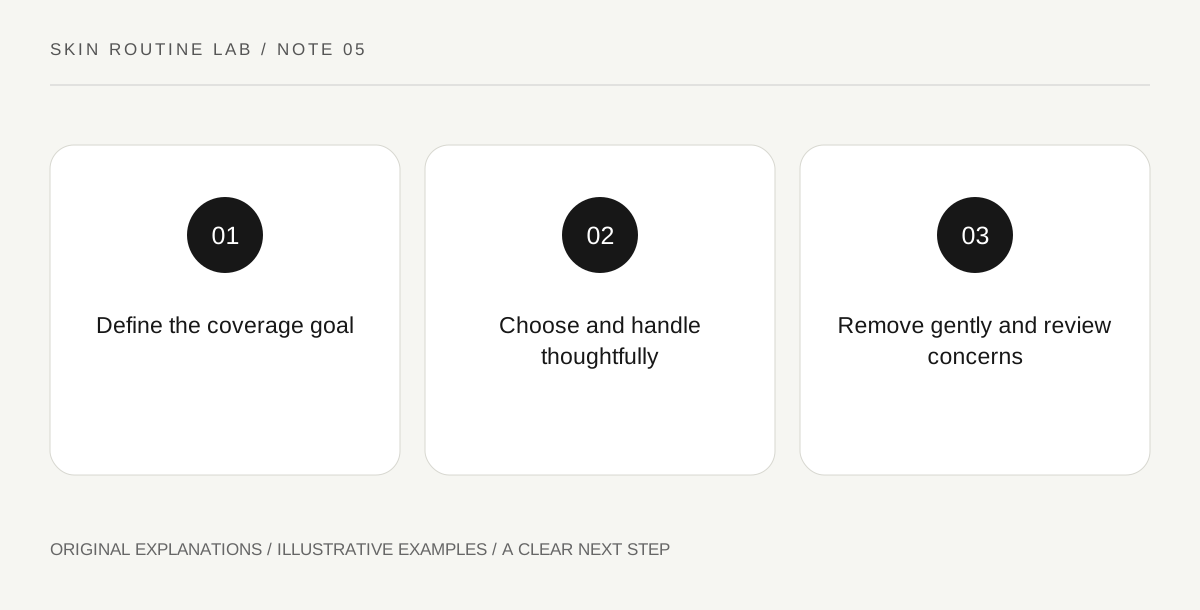
Original explanatory diagram. Read the full method and limitations below.
Separate the cosmetic goal from the skin concern
Describe the finish you want, such as light coverage for a workday or a concealer used on a small area. Keep that distinct from treating acne. A product advertised as blurring texture may change appearance without changing the underlying condition. AAD advises that people with acne can use makeup while paying attention to suitable products and hygiene. If you are following treatment, ask how cosmetics fit with it. Do not replace a prescribed plan with a tinted product because both packages mention blemishes. The roles may overlap in marketing while remaining very different in actual use.
Read selection language with realistic expectations
Labels such as oil-free or noncomedogenic can be useful starting points when looking for makeup intended for acne-prone skin. They do not guarantee that every person will tolerate the product or that acne will clear. Keep a complete ingredient list when there is a known allergy or professional instruction. Choose a manageable product rather than buying several new layers at once. If one product is suspected of worsening breakouts, it is easier to discuss when its identity and timing are clear. Avoid trying to prove an ingredient guilty from an online list alone; finished formulas and individual responses can differ.
Reduce avoidable tool and handling problems
Use personal, appropriately clean applicators and avoid sharing. AAD recommends regular cleaning of makeup brushes. Apply according to directions without repeatedly pressing or rubbing inflamed areas. Do not pick at a spot to create a smoother surface for concealer. If a particular area is painful, broken or otherwise concerning, seek appropriate advice rather than hiding it under more product. Keep testers and borrowed tools out of the routine when their handling is uncertain. A comfortable application should not require aggressive preparation, and more coverage is an optional cosmetic choice rather than an obligation to conceal ordinary skin.
Plan removal and a fair review
Remove makeup gently with products intended for the task and follow any treatment instructions. Scrubbing until the skin feels tight does not prove that makeup has been removed better. Keep the routine consistent enough to notice practical problems, such as difficult removal or a texture that encourages repeated touching. If acne persists, worsens or leaves marks, ask a qualified professional about care. Do not claim that stopping one foundation will solve every case. Equally, a product does not earn permanent shelf space because it was expensive or recommended by someone whose skin needs differ from yours.
Check the finish in ordinary light before adding another layer; close magnification can encourage unnecessary application that makes removal more demanding. An uneven patch of coverage can be adjusted without picking at the skin underneath.
An illustrative coverage decision
Lena wants light coverage during office days. She chooses one appropriately labeled product, uses her own clean applicator and keeps her existing acne care instructions visible. When a new concern appears, she records the product name and timing for her dermatologist. She does not add a second medicated cosmetic to compensate without advice.
Practical checks
Optional checkboxes save only in this browser.
Questions that come up
Does noncomedogenic mean acne treatment?
No. It is selection language about a product, not proof that it treats acne or suits every individual.
Should I scrub harder to remove foundation?
No. Use appropriate removal directions and gentle handling. Persistent irritation or acne needs a separate care conversation.
References and scope
These sources support the factual background. Examples and exercises are original illustrative teaching material. References do not imply endorsement.
- AAD: Is It Okay to Wear Makeup with Acne? — Makeup selection, gentle removal and tool hygiene for acne-prone skin.