Map hair-product contact when bumps cluster near the hairline
Hair products can reach more than hair: a fringe rests on the forehead, conditioner runs over the back and styling residue reaches a pillowcase. When bumps cluster near these contact areas, the exposure pattern is worth discussing. It is a clue to investigate, not a diagnosis made from location alone.
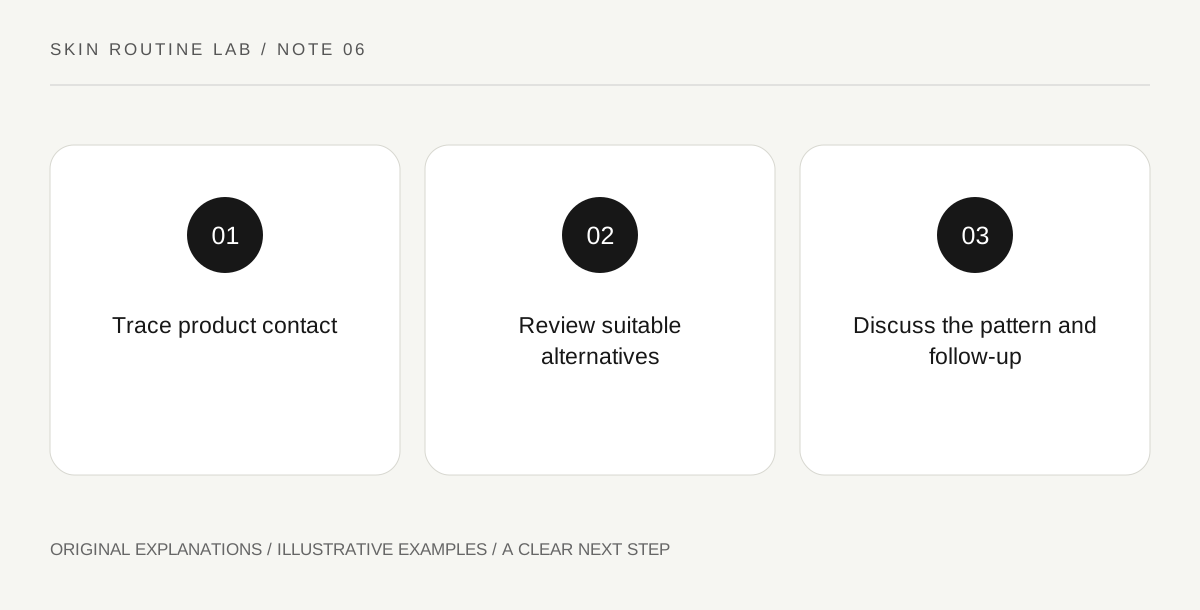
Original explanatory diagram. Read the full method and limitations below.
Trace the route from product to skin
List leave-in conditioners, oils, styling creams, sprays and other products that touch hair near the face or body. Think about application, drying, sleep and exercise. A product applied only to the ends may still reach the neck when hair is loose. AAD identifies hair-care products as a possible contributor to acne. That does not establish that every bump near hair is acne or that every oil is responsible. Record which areas are affected and when the concern began. A simple contact map can show what a general list of facial skincare products misses.
Keep hair needs in the decision
Do not respond by abandoning necessary hair care or treating textured hair as inherently problematic. The aim is to find a routine that serves both hair and skin needs. Ask a dermatologist about appropriate product choices if acne or irritation is suspected. Product labels intended for acne-prone skin can offer a starting point, while individual suitability still matters. Consider application method as well as formula. Keeping a product away from unintended skin contact may be practical in one routine; another may need a different product. Avoid a universal rule that everyone should stop using the same category.
Review contact surfaces without creating a cleaning obsession
Pillowcases, headbands and hats can collect residue. Follow appropriate laundering and cleaning instructions and use clean items rather than repeatedly applying product to a dirty contact surface. Keep the task proportionate: a workable wash routine is more useful than disinfecting the entire bedroom. Do not apply harsh cleaners to the scalp or face because residue is suspected. If a shared item is involved, agree on personal use or cleaning arrangements. The goal is reducing avoidable contact and keeping the history clear, without blaming every skin change on household cleanliness or requiring perfect control of every surface.
Bring the pattern to a qualified assessment
Describe the location, onset and products involved, especially if the concern is persistent, painful, spreading or leaving marks. Bring photos or labels if helpful and keep them private. Ask whether the pattern is consistent with the suspected issue and what changes are appropriate. Avoid introducing several treatments while trying to understand the exposure; that makes interpretation harder and can add irritation. Follow the professional plan and review the result at the agreed time. A contact-map exercise can guide questions, but it cannot establish the cause, prescribe a treatment or promise that a hair-product change will clear the skin.
When hair is tied back for exercise, notice whether a headband changes the contact pattern; this can help explain repeated contact in one area. Keep required protective equipment safely fitted while asking about skin concerns.
An illustrative fringe review
Maya notices new bumps near her forehead after adding a leave-in styling cream. She records where the cream and her fringe touch, checks cleaning arrangements for her headband and brings the product label to a dermatologist. She asks about suitable changes while preserving the hair care she needs. Location alone does not settle the diagnosis.
Practical checks
Optional checkboxes save only in this browser.
Questions that come up
Do bumps at the hairline always mean a product caused acne?
No. The pattern can guide questions, but several skin problems can look similar. A professional assessment may be needed.
Should I remove every hair product at once?
Avoid an indiscriminate change that leaves hair needs unmet and makes the history unclear. Ask about a focused, appropriate adjustment.
References and scope
These sources support the factual background. Examples and exercises are original illustrative teaching material. References do not imply endorsement.
- AAD: What Causes Acne? — Hair products, equipment and cosmetics can be relevant to acne concerns.