Avoid turning a dark mark into an irritation project
A mark left after an irritated spot can lead to scrubbing, picking and several brightening products at once. That cycle can create more irritation instead of a useful plan. The first question is what the mark is and what is still triggering inflammation, particularly when the skin readily develops persistent discoloration.
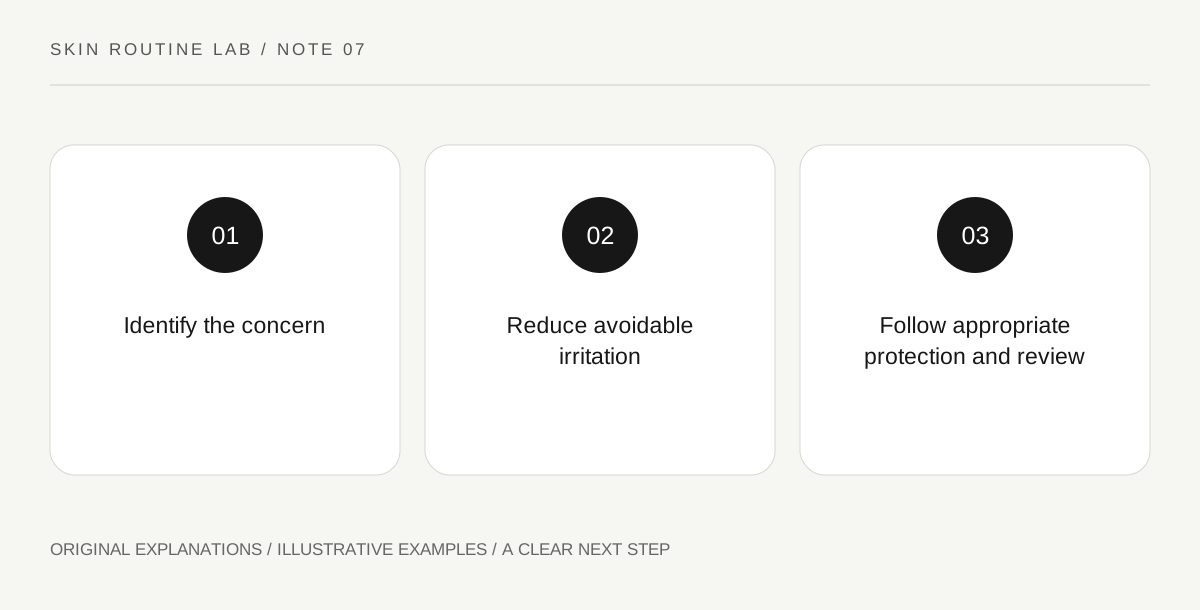
Original explanatory diagram. Read the full method and limitations below.
Distinguish a mark from an active problem
Describe whether the area is flat discoloration, still inflamed, painful, raised or changing. Do not assume every dark spot is the same condition or can be treated with the same cosmetic. AAD explains that dark marks can follow skin injury or inflammation, while assessment may be needed to understand a particular spot. If the mark is new, changing or concerning, seek professional advice. A photograph in an advertisement is not a diagnosis for your face. Keep the history of the preceding rash, acne or irritation available so the discussion begins with the actual sequence rather than a product category.
Stop adding injury to the area
Picking, harsh scrubbing or repeatedly using products that burn can work against the goal. AAD notes that irritation can contribute to darkening. Do not treat stinging as proof that a brightening formula is reaching a deeper layer. Pause a suspected irritating cosmetic and seek appropriate advice, particularly when symptoms are significant. Avoid combining several unfamiliar acids, peels or spot products in the hope that more routes mean faster results. The skin concern may need treatment, but a general article cannot choose that treatment or set a safe combination for you. A calmer routine makes the next conversation clearer.
Keep protection relevant to pigmentation
Discuss suitable sun protection and follow current product directions. AAD also highlights visible light in relation to some pigmentation concerns, particularly in darker skin tones. A tinted sunscreen containing iron oxides may be relevant, but the exact choice should fit your needs and any professional plan. Do not assume ordinary foundation supplies equivalent protection or apply an inadequate amount to preserve a preferred makeup finish. Clothing and shade can support the overall approach. The purpose is practical protection while the concern is addressed, not a promise that sunscreen alone erases every mark or that darker skin never needs protection.
Review progress without a daily color contest
If a professional provides a plan, ask about realistic review timing and what changes should be reported. Avoid judging a mark every morning under different lighting or camera filters. Those comparisons can exaggerate differences and encourage unnecessary product switching. If you keep photos for a clinical conversation, use consistent ordinary conditions and identify the date. Do not post them as a claimed treatment result unless you are accurately describing your own experience and its limits. A useful review asks whether the underlying irritation is controlled and whether the agreed plan remains appropriate, not whether the skin matches an edited before-and-after image.
Optional coverage can be discussed without making concealment a condition for work or social life. The practical plan should leave room for your preference rather than treating an advertisement's ideal complexion as a standard you must reach.
An illustrative mark review
Imani sees a flat dark mark after a spot heals and starts to reach for both a scrub and a new peel. She instead stops picking, keeps the previous inflammation history and asks a dermatologist about the mark and suitable care. She follows protection advice without expecting a fixed fading date from a cosmetic advertisement.
Practical checks
Optional checkboxes save only in this browser.
Questions that come up
Does a stronger peel necessarily fade a mark faster?
No. Irritation can create additional problems, including discoloration. Ask about appropriate treatment rather than escalating strength yourself.
Can every dark spot be identified from a photo online?
No. A professional may need history and examination, especially for a new or changing lesion.
References and scope
These sources support the factual background. Examples and exercises are original illustrative teaching material. References do not imply endorsement.
- AAD: How to Fade Dark Spots in Darker Skin Tones — Irritation, pigmentation, sun protection and professional assessment.