An AHA percentage does not tell the whole product story
An alpha hydroxy acid percentage can look like a simple way to rank products, but formula, directions and sun-sensitivity cautions also matter. A higher number is not a personalized recommendation. Reading the complete label helps you decide what remains unclear before adding an optional acid product to an existing routine.
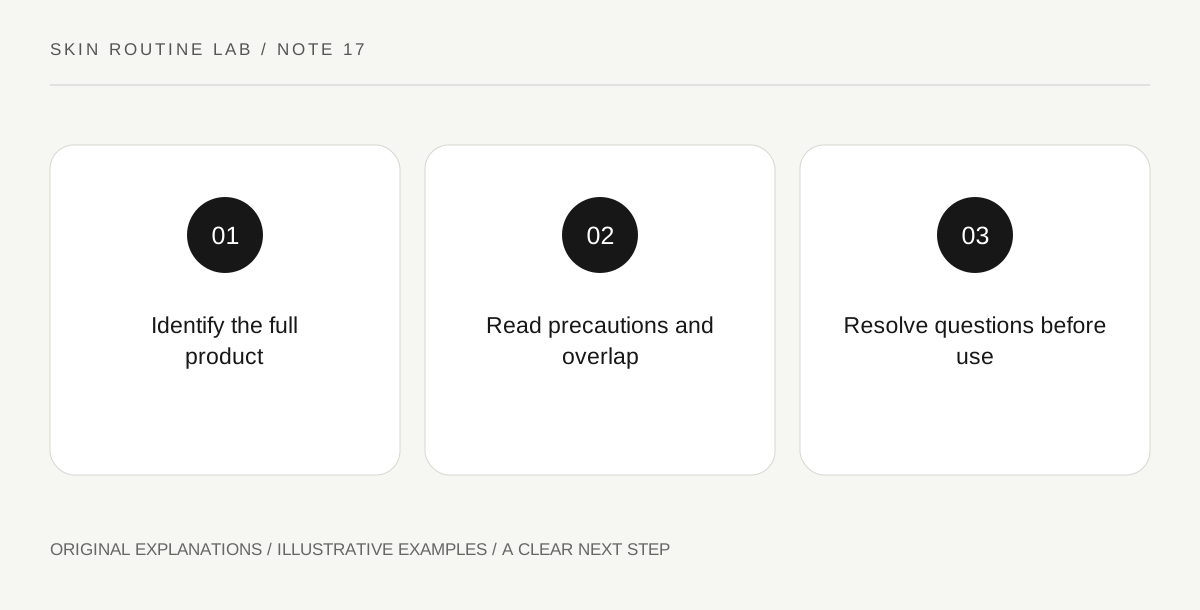
Original explanatory diagram. Read the full method and limitations below.
Identify the product category and intended use
Read the exact name, intended area and whether the product is a rinse-off or leave-on formula. A cleanser with an acid ingredient and a professional peel are not interchangeable because both mention an AHA. FDA explains that alpha hydroxy acids appear in cosmetic and drug products and provides specific safety information. Do not infer the method from a percentage displayed on the front. A formula's pH and other characteristics can affect its behavior, and the front label may not provide enough information to compare two products. Keep the complete directions rather than collecting a single impressive number.
Read the sun-sensitivity caution
FDA discusses increased sun sensitivity associated with AHA products and recommends appropriate protection and precautions during use and afterward as directed. Treat that warning as part of the product decision, not small print separate from the routine. Consider whether you can follow the protection instructions during your normal work, commute and recreation. Do not use an AHA to prepare for tanning or assume a brief evening application removes daytime considerations. Ask a professional when existing skin conditions, treatment or personal circumstances make the choice uncertain. This guide does not set a universal exposure window for every formula.
Check overlap before adding strength
List other exfoliants, retinoids, acne products and prescription treatments. A new AHA may duplicate a role or increase irritation even if each item seems modest alone. Ask your clinician how the proposed product fits the actual plan. Avoid starting several unfamiliar actives together, which makes it difficult to understand a reaction. Do not dilute a strong product at home to create a supposedly safer percentage; that changes the formula and may not produce a predictable result. Similarly, a product intended for professional use should not be turned into a home experiment because the ingredient name is familiar.
Make a purchase decision with unanswered questions visible
If directions, intended use or compatibility remain unclear, ask the manufacturer or a qualified dermatologist before buying. A promotion that ends tonight does not make those questions less relevant. If you choose a suitable product, follow its directions and stop for a concerning reaction rather than extending contact time to chase a faster result. Retain the label and product identity. A decision to skip an AHA is reasonable when an existing routine already serves your needs. Product literacy should reduce unnecessary complexity, not create a duty to maintain the strongest acid step your skin can tolerate.
Keep the label after purchase: a decanted bottle marked only with an acid percentage loses the directions governing its use. An ingredient name should never replace instructions for the complete formula.
An illustrative percentage comparison
Mia sees one product advertising a higher AHA percentage than another. Instead of ranking them by that number, she checks intended use, contact directions, warnings and her current treatment. Because one product is intended for professional use, she excludes it from a home purchase and asks about whether any optional AHA is appropriate.
Practical checks
Optional checkboxes save only in this browser.
Questions that come up
Is a higher percentage always more effective?
No. A percentage alone does not describe the complete formula or establish suitability for your skin and purpose.
Can I dilute a professional peel for home use?
Do not improvise a formula or procedure. Use products only as intended and seek appropriately qualified advice about professional treatments.
References and scope
These sources support the factual background. Examples and exercises are original illustrative teaching material. References do not imply endorsement.
- FDA: Alpha Hydroxy Acids — AHA ingredient information and sun-sensitivity cautions.