Build a cosmetic shelf-life map without inventing one expiry rule
Cosmetics do not all last the same amount of time, and a purchase date is not always an opening date. A useful shelf review combines label directions, storage history and product condition. It avoids a universal calendar rule that ignores the differences between eye makeup, powders, creams and products regulated as medicines.
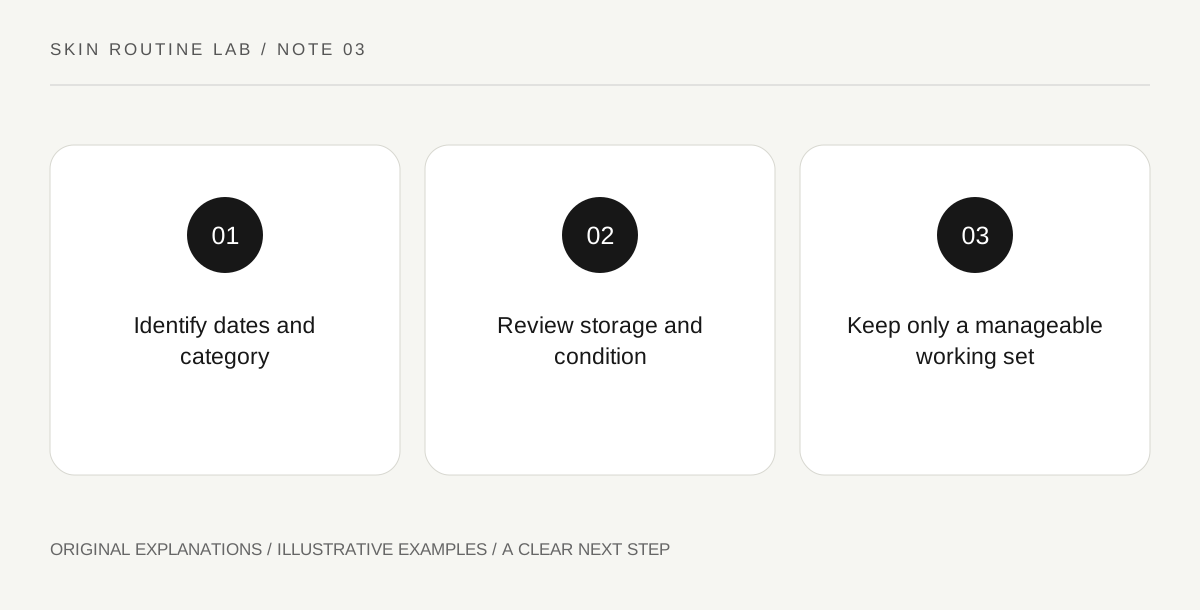
Original explanatory diagram. Read the full method and limitations below.
Record what the date actually means
Write down when an item was opened if you know it, and keep any printed expiration or period-after-opening information. Distinguish that from the date you bought it. A backup tube may remain unopened for months, while a gift may arrive without a known storage history. Mark unknown information as unknown rather than creating a reassuring date. FDA explains that cosmetic shelf life varies and that ordinary cosmetics do not all follow the same expiration-label requirements. Some products, including certain sunscreen or acne products, are regulated as drugs and have their own requirements. Check the actual category and label.
Include storage history in the decision
Heat, moisture, air exposure and handling can affect products. A tube repeatedly left in a hot car has a different history from one stored according to directions. Keep daily items away from unnecessary heat and close containers after use. Do not assume a refrigerator improves every formula; follow the manufacturer's instructions. A product's bathroom location may be convenient but exposed to repeated splashes. Consider a dry, accessible storage place that still makes the routine easy. The goal is appropriate storage rather than an elaborate display that ignores temperature, contamination or the ability to read labels.
Look for change without relying on appearance alone
Unexpected odor, color, separation or texture changes are reasons to stop and check the product guidance or discard as appropriate. Do not add liquids, stir in another cosmetic or scrape away a suspicious layer to restore it. At the same time, a normal appearance does not prove safety. Follow expiration and replacement directions even when the product still looks familiar. Eye cosmetics deserve particular attention because contamination can have serious consequences. Keep any clinical or manufacturer instructions after an infection separate from a generic shelf calendar; the relevant response may be earlier disposal rather than waiting for a usual date.
Buy for realistic use rather than theoretical savings
A large size is economical only when it can be used appropriately within its usable life. Compare how often you use a product and whether a smaller format reduces waste. Avoid opening several versions at once merely to compare packaging or participate in a trend. Keep the current working item easy to distinguish from unopened backups. During a shelf review, remove products whose identity or history cannot be resolved rather than passing them to a friend as a harmless way to avoid waste. A modest collection with clear dates is easier to manage than a large inventory supported by guesses.
A single shelf-review date can remind you to check products without assigning them identical lifespans. A barely used powder and a frequently opened eye product still have different handling histories and directions.
An illustrative shelf review
Amina finds two identical creams. One is unopened with clear label information; the other has been used intermittently with an unknown opening date and an altered texture. She keeps the unopened item according to directions and stops using the changed product. She begins noting future opening dates instead of assigning every cosmetic the same lifespan.
Practical checks
Optional checkboxes save only in this browser.
Questions that come up
Do all cosmetics have a mandatory printed expiry date?
Requirements vary by product category and jurisdiction. FDA explains that ordinary cosmetics and drug products do not all follow the same rules. Read the specific label.
If a product smells normal, is it definitely safe?
No. Appearance and odor are limited checks. Follow directions, expiration information and appropriate disposal guidance as well.
References and scope
These sources support the factual background. Examples and exercises are original illustrative teaching material. References do not imply endorsement.
- FDA: Shelf Life and Expiration Dating of Cosmetics — Storage, shelf-life variability, eye cosmetics and changes in products.