A makeup-brush cleaning routine needs a drying place, not just soap
A brush-cleaning plan often fails at the drying stage: tools are washed late at night, left crowded in a cup and needed again in the morning. Planning the whole cycle makes hygiene easier. The aim is clean, usable personal tools, without claiming that brush washing alone treats acne or every skin problem.
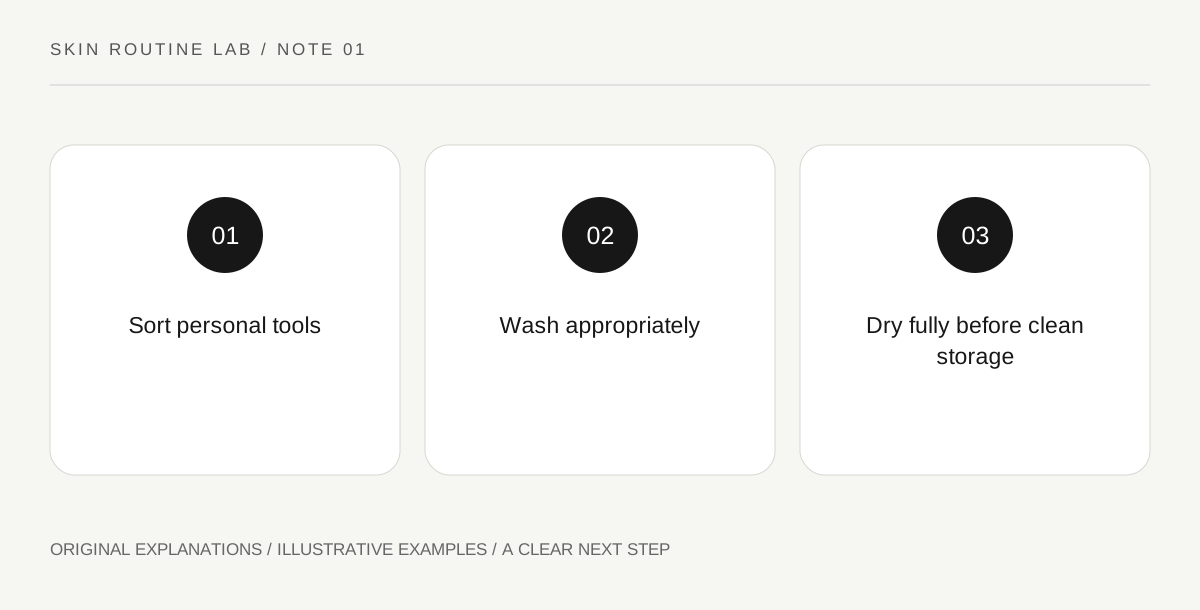
Original explanatory diagram. Read the full method and limitations below.
Sort tools by actual use
Lay out the brushes you use and separate them from decorative extras. Identify which touch liquid or cream makeup, which are used near the eyes and which have damaged bristles or loose parts. Keep the manufacturer's care instructions available. A large collection can make cleaning feel more demanding than the smaller working set you actually need. Put unused clean tools away rather than repeatedly handling them. Avoid sharing brushes, even when a friend uses a similar foundation or offers to wipe the bristles first. Personal ownership is a simpler arrangement than trying to judge whether a quick shared-tool cleanup was sufficient.
Clean with an appropriate method
AAD recommends regular brush washing and describes cleaning the bristles gently with suitable shampoo and water, rinsing until the water runs clear. Follow relevant care directions and avoid soaking a handle or glued joint unnecessarily. The cleaning task is removing accumulated product and residue, not scrubbing until the brush loses its shape. Keep the water and workspace separate from open cosmetics so splashes do not enter them. Do not assume that a perfume spray or a quick wipe is equivalent to a full cleaning method. If a brush cannot be cleaned appropriately or is falling apart, replacement may be the practical option.
Make drying physically possible
Choose a clean location where brushes can dry in the manner recommended for them, without crowding wet heads together or sealing them in a bag. AAD describes drying brushes flat with the tips hanging off an edge. Keep them away from bathroom splashes and household traffic. Allow enough time before the next planned use rather than applying makeup with a still-wet brush because you ran out of options. If you routinely wash late, shift the task to a time when the tools can remain undisturbed. A small working set and a clear drying space often solve more than another specialized cleaning accessory.
Return tools to a clean storage system
Once dry, put tools into a clean, dry destination instead of a pouch containing old makeup dust. Clean the storage item as appropriate for its material and let it dry too. Keep the routine visible through a calendar cue or another reminder that you already use, without treating missed cleaning as a reason for shame. If irritation or breakouts continue, seek appropriate skin advice rather than washing tools more aggressively or buying an antibacterial product without a clear purpose. Tool hygiene supports a routine; it does not establish the cause of a rash or replace prescribed treatment.
Check that the drying spot remains usable when other people need the bathroom, so the routine does not depend on everyone avoiding the sink overnight. If a shared surface is needed, agree on a clean alternative in advance.
An illustrative Sunday cycle
Nadia uses five brushes rather than the twelve displayed on her dresser. She washes the working set on Sunday morning, prepares a clean drying area and cleans the storage pouch separately. The brushes are fully dry before Monday makeup. She keeps persistent skin irritation as a separate question for her dermatologist.
Practical checks
Optional checkboxes save only in this browser.
Questions that come up
Can two friends share a brush after a quick wipe?
Avoid sharing makeup brushes. A quick wipe should not be treated as proof that a shared tool is safe.
Will brush cleaning cure acne?
It can improve tool hygiene but does not diagnose or treat every cause of acne. Seek appropriate care for persistent or worsening concerns.
References and scope
These sources support the factual background. Examples and exercises are original illustrative teaching material. References do not imply endorsement.
- AAD: How to Clean Your Makeup Brushes — Brush cleaning, drying and avoiding shared makeup tools.