Make the pool-to-home transition comfortable for skin
Swimming can leave skin feeling dry, especially when the trip home begins in a wet swimsuit or a hot shower becomes the main cleanup. A useful plan accounts for rinsing, clothing and familiar care. It does not diagnose every pool-related rash or imply that a cosmetic can prevent all water-related skin problems.
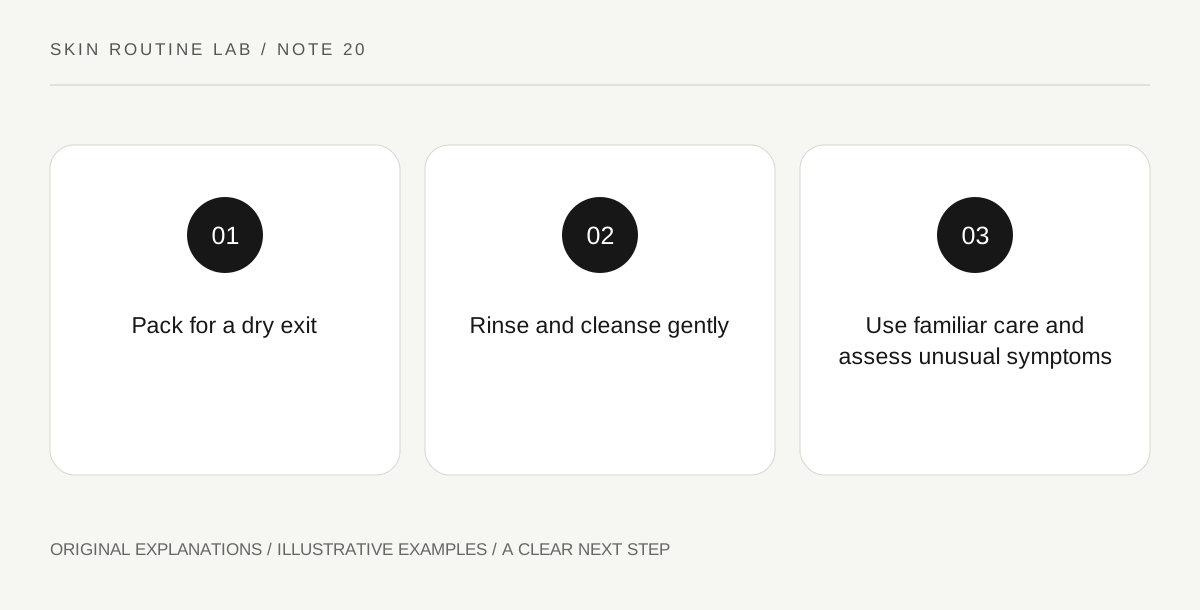
Original explanatory diagram. Read the full method and limitations below.
Plan the exit before entering the pool
Check the venue's shower and changing arrangements and pack what you need to leave in dry, comfortable clothing. A towel, suitable footwear and a bag for wet items can make the transition straightforward. Follow pool hygiene rules and use only products permitted by the venue before swimming. AAD notes that pool exposure and summer activities can contribute to dry or irritated skin. That does not make every post-swim symptom ordinary dryness. If you have a diagnosed condition or treatment instructions, ask the appropriate clinician how swimming fits the plan rather than improvising a protective coating before entry.
Rinse and cleanse without adding heat and friction
Follow appropriate post-swim rinsing and gentle cleansing practices, using comfortable water rather than a long very hot shower. Avoid scrubbing until the skin feels squeaky or tight. Removing pool residue does not require an abrasive body tool. Use products intended for the relevant areas and follow directions. If you are also removing makeup or water-resistant sunscreen, check the removal instructions rather than rubbing harder. Keep shared shower surfaces and products in perspective: use your own personal tools and do not borrow an unmarked product because its container is nearby. A manageable routine can be brief and still deliberate.
Change out of wet gear and use familiar care
Remove wet swimwear when practical, dry gently and use suitable familiar moisturizing care according to directions and any clinical plan. AAD's summer guidance discusses dryness around swimming and gentle skin care. Keep the moisturizer accessible rather than buried under wet towels, so the plan does not depend on remembering it later. Do not introduce a strong exfoliant immediately because the skin feels rough after swimming. If a product stings or a rash appears, stop experimenting and seek appropriate advice. A texture change after one swim is not enough information to diagnose a condition or choose a medicated treatment.
Keep unusual symptoms outside the ordinary-dryness assumption
Notice whether the concern is simple tightness or a new rash, painful area, blistering or another persistent symptom. Water exposure can be associated with several skin problems, and the setting matters. Tell a clinician where you swam, when symptoms began and what products were used if assessment is needed. Do not treat photographs of similar-looking rashes online as confirmation. Review the practical transition separately: was dry clothing available, was the shower too hot and did the wet bag stay separate from clean items? Those improvements can make the next visit more comfortable without claiming to eliminate every skin risk.
Clean and dry the wet-item compartment according to its material instructions, so the next swim does not begin with damp supplies from the previous visit. Pack the clean towel separately from used swimwear.
An illustrative swim bag
Clare packs dry clothes, a personal towel and a familiar moisturizer in a separate dry compartment. After swimming she follows venue and product guidance, rinses gently and changes before a long bus ride. When an unfamiliar rash persists after a later visit, she seeks advice and mentions the pool rather than adding a stronger body wash.
Practical checks
Optional checkboxes save only in this browser.
Questions that come up
Is every rash after swimming just dryness?
No. Several conditions can follow water exposure. Seek appropriate assessment for persistent, painful or concerning symptoms.
Should I exfoliate to remove the pool feeling?
Avoid aggressive exfoliation on uncomfortable skin. Use suitable gentle cleansing and care, and ask a professional if the problem continues.
References and scope
These sources support the factual background. Examples and exercises are original illustrative teaching material. References do not imply endorsement.
- AAD: Twelve Summer Skin Problems You Can Prevent — Swimming-related dryness and practical summer skincare.