Build a post-workout skin routine around sweat, fabric and contact
A workout changes what touches your skin: sweat, towels, equipment, tight clothing and hands. A useful skin routine addresses those contacts without turning exercise into an acne treatment or a reason to scrub. The goal is a practical transition out of sweaty gear and into comfortable care.
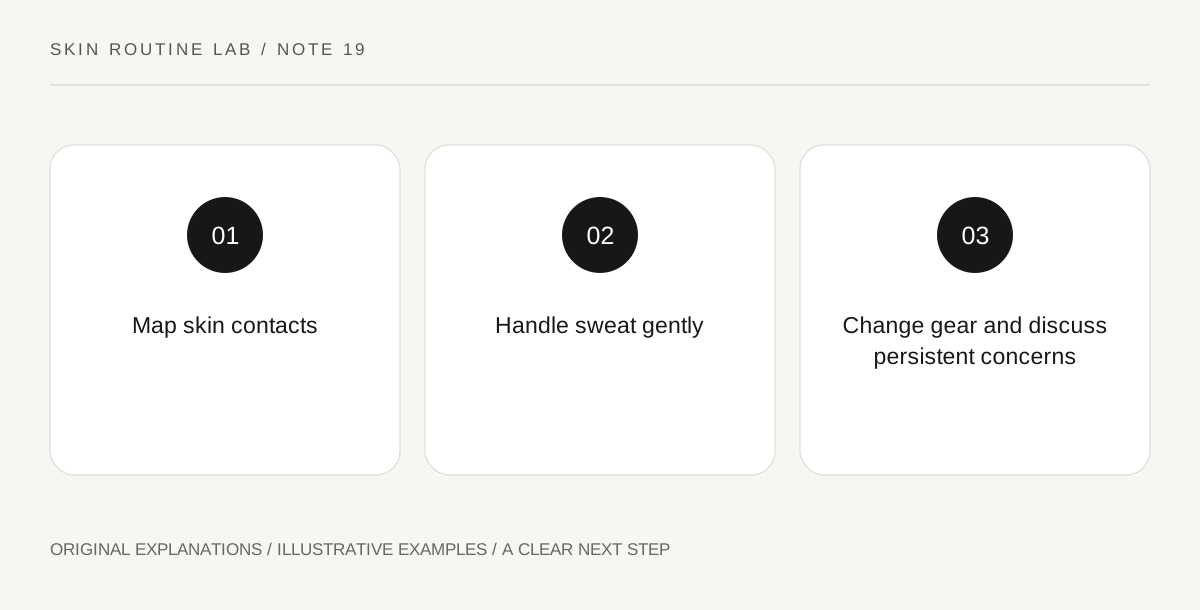
Original explanatory diagram. Read the full method and limitations below.
Map the contacts during the session
Notice where clothing, straps, helmets or benches contact the skin and whether you repeatedly wipe or touch the same area. AAD discusses how workouts and equipment can contribute to acne problems in some people. The location of a bump is a clue, not a diagnosis. Keep required safety equipment properly fitted rather than loosening it unsafely to protect a makeup finish. Ask a qualified provider about fit if it rubs. Personal needs differ, and a skin concern should be addressed without abandoning necessary protective gear or assuming every post-workout mark has the same cause.
Handle sweat gently
Use a clean personal towel and gently pat sweat rather than rubbing vigorously. AAD recommends gentle handling because friction can aggravate skin. Avoid wiping the face with a shirt that has contacted equipment or the floor. Keep hands away from the face when possible and follow appropriate equipment-cleaning practices for the facility. Do not apply a harsh surface disinfectant to skin simply because it is available near a machine. The products serve different purposes. A short practical sequence can work without adding an elaborate pre-workout lineup of cosmetic products or treating visible sweat as evidence that skin is detoxifying.
Make changing clothes possible
Pack a clean change when the schedule allows and move out of sweaty clothing after the session. Consider transport, shower access and work obligations before choosing the gym time. A routine that depends on a shower you cannot use needs a realistic alternative rather than a reminder to try harder. Clean workout clothing according to care instructions and keep used gear separate from clean personal tools. If a backpack holds damp clothes and makeup brushes together, separate their storage. Avoid returning damp items to a closed bag for repeated use. Comfort and clean contact surfaces are the practical aim.
Keep treatment questions separate from cleanup
If breakouts persist, become painful or leave marks, ask a dermatologist about care. Do not add several acne washes or strong exfoliants simply because workouts seem involved. Bring the contact pattern, products and timing to the conversation. Follow any existing treatment and sun-protection instructions, especially for outdoor exercise. If makeup is difficult to manage during the session, choose a simpler cosmetic option rather than compensating with aggressive removal afterward. A usable transition supports exercise and skin comfort without promising that showering immediately or washing a particular number of times will prevent every breakout.
If work follows the session, choose the workout time with changing facilities in mind. A realistic transition accounts for the commute as well as the gym and is easier to maintain than a rushed ideal routine.
An illustrative gym-to-work transition
Noor notices that her backpack mixes damp gym clothes with a makeup pouch. She adds a separate washable bag for used clothes, carries a clean towel and plans a practical change before work. She keeps a note of persistent shoulder bumps for a dermatologist rather than adding a strong scrub after every workout.
Practical checks
Optional checkboxes save only in this browser.
Questions that come up
Should I scrub sweat off aggressively?
No. Use gentle handling and appropriate cleansing. Rubbing and harsh products can add irritation.
Does a breakout mean I should stop exercising?
Do not assume that. Review contact, clothing and care, and ask a professional about persistent concerns while maintaining an appropriate activity plan.
References and scope
These sources support the factual background. Examples and exercises are original illustrative teaching material. References do not imply endorsement.
- AAD: Is Your Workout Causing Acne? — Gentle sweat handling, clean clothing and equipment contact.